
Article directory
Many online marketers use the VestaCP panel ( CentOS 7) to build websites and do SEO.
- LetE-commerceThe stable operation of the website is very important, so as to achieve the idealWeb PromotionEffect.
If the VPS memory is exhausted and a 500 error occurs, it can be used in SSH htop command to view the host process status.
However, a minimal installation of VestaCP does not include the htop monitoring tool by default, which may result in a "command not found" error message such as " -bash: htop: command not found".
- This tutorial will explain this in detailLinuxUse the htop command method.
There are more Linux monitoring tool tutorials here ▼


What is htop?
- htop is an interactive and real-time system monitoring process viewer written for Linux.
- It is intended to replace top for Unix programs.
- It shows a frequently updated list of processes running on your computer, usually sorted by CPU usage.
The difference between top and htop
- Unlike top, htop provides a complete list of running processes, not the most resource-hungry ones.
- Htop uses color and provides visual information about processor, swap, and memory state.
htop and top comparison
- In 'htop' you can scroll the list vertically and horizontally to see all processes and the full command line.
- In 'top', each unassigned key press is delayed (especially annoying when multi-key escape sequences are triggered accidentally).
- 'htop' starts faster ('top' seems to collect data for a while before displaying anything).
- In 'htop' you don't need to type the process number to kill a process, in 'top' you do.
- In 'htop' you don't need to type the process number or priority value to render a process, in 'top' you can.
- 'htop' supports mouse operations, 'top' does not
- 'top' is older and therefore more used and tested.
yum install htop on RHEL/CentOS 5.x/6.x/7.x
By default, the ytop tool is not available in the yum repository.
Step 1: Enable the RPMForge repository
- We enable the RPMForge repository.
RHEL/CentOS 7 64-bit:
wget http://dl.fedoraproject.org/pub/epel/epel-release-latest-7.noarch.rpm
rpm -ivh epel-release-latest-7.noarch.rpm
RHEL/CentOS 6 32-bit:
wget http://download.fedoraproject.org/pub/epel/6/i386/epel-release-6-8.noarch.rpm
 rpm -ivh epel-release-6-8.noarch.rpm
- CentOS 7 does not support 32-bit EPEL repositories, so use RHEL/CentOS 6 32-bit.
Step 2: Install htop using the yum command ▼
yum install htop
Step 3: Use the htop command ▼
htop
Download htop source code cross compile and install
If you prefer to compile and install htop from source, please download the source and compile it ▼
wget http://downloads.sourceforge.net/project/htop/htop/1.0.2/htop-1.0.2.tar.gz#tar
-xvf htop-1.0.2.tar.gz
cd htop-1.0。 2
./configure
make
make install
- If you have installed htop using yum, skip this step.
How to use htop command?
After installation, simply type `htop` in the SSH terminal to start it. ▼
htop
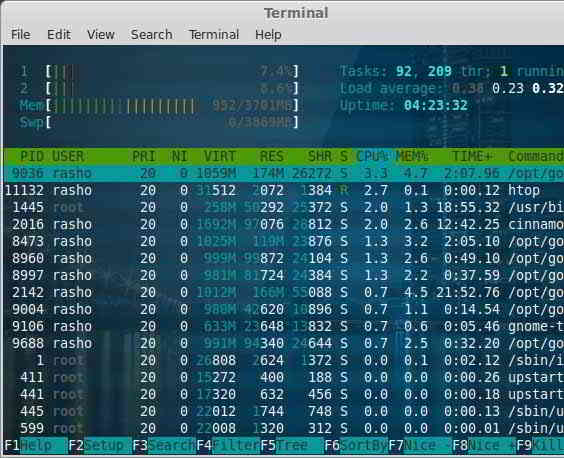
At the top of htop, you can see the navigation with colors▼
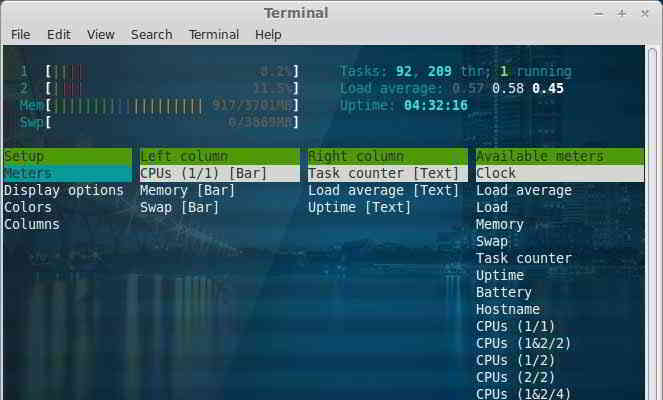
Press " F2" or "S" to view the htop settings menu ▼
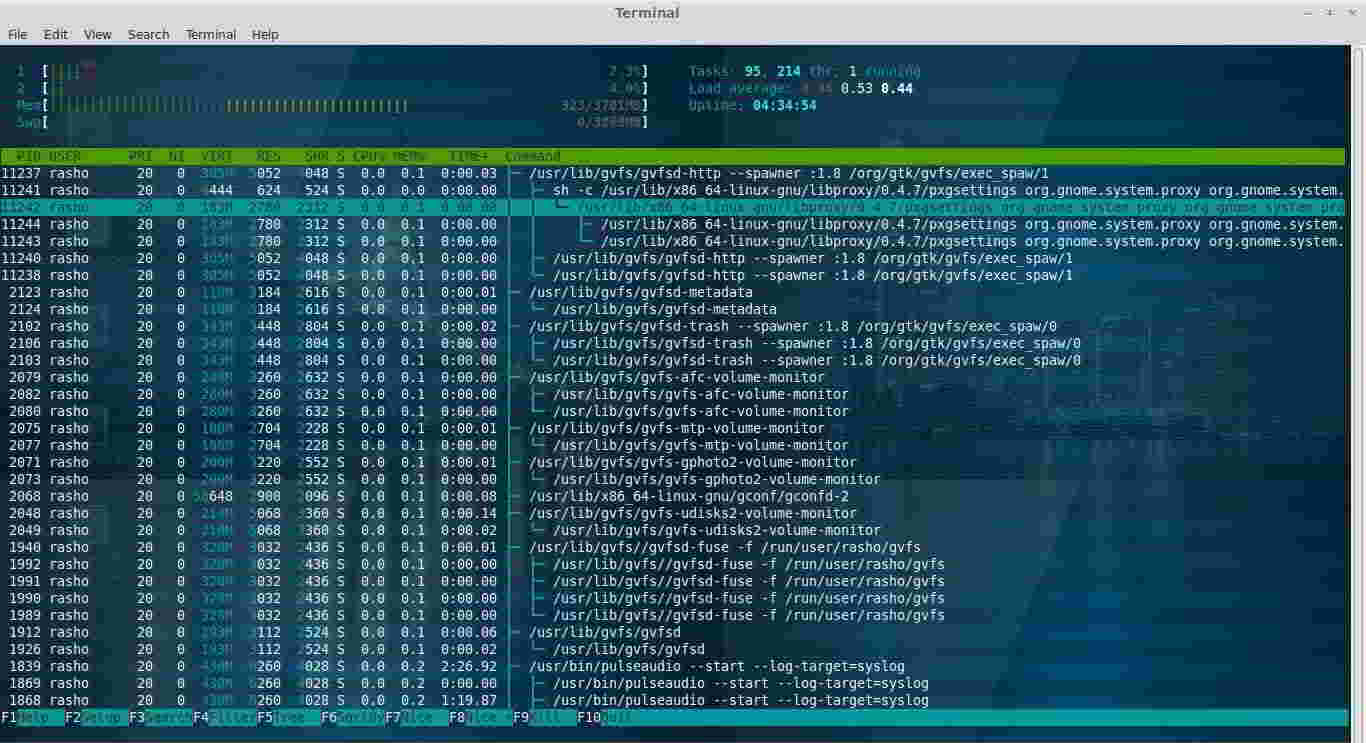
To view the list of processes in the htop tree view , press " F5" or " t" . ▼
Change htop refresh interval
To change the refresh interval for htop output, use the -d command line option.
"htop -dx" (x means refreshed in seconds)▼
htop -d 10
Detailed explanation of HTOP shortcut keys and function keys
The following is the command description diagram of the shortcut keys and function keys of the HTOP monitoring tool ▼

Hopefully, the article "How to install htop using yum on CentOS 7? A detailed explanation of how to use the htop command in Linux" shared on Chen Weiliang's blog ( https://www.chenweiliang.com/ ) will be helpful to you.
Feel free to share this article's link: https://www.chenweiliang.com/cwl-736.html