
Article directory
Are human doctors going to be out of a job? ChatGPT has now put the scalpel right into your phone!
In this era where staying up late is addictive and goji berries are soaked in thermos cups, our anxiety about health has already overflowed the screen.
In the past, if you were feeling unwell, you might have had to endure the alarming search results like "Baidu for medical advice starts with cancer" in the search bar.
Or you might be holding a lab report filled with gibberish, completely baffled by the plus and minus signs.
Now, OpenAI has finally revealed its trump card, releasing a dedicated ChatGPT health feature.
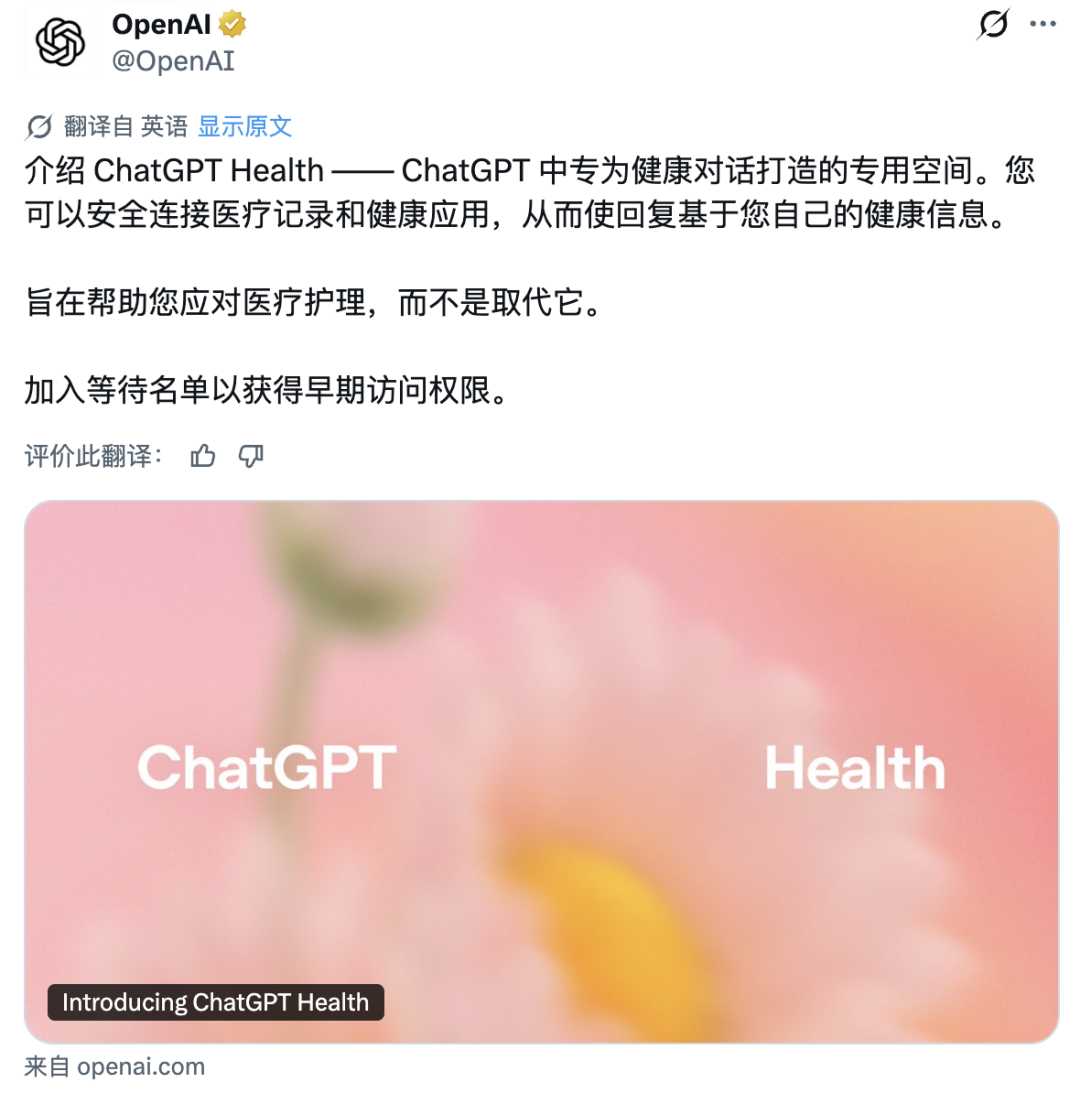
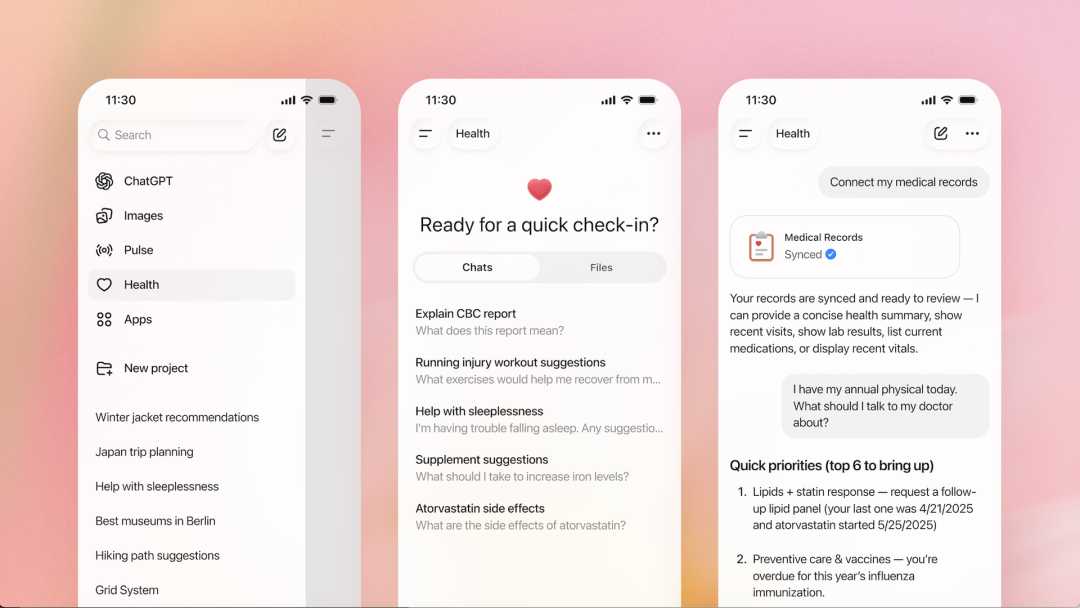
This isn't the kind of robot that just reads encyclopedias; it's an "AI family doctor" that can read your medical records and connect to your Apple Watch.
OpenAI has launched a new section called ChatGPT Health.
Its most ruthless aspect is that it is no longer an isolated dialog box, but has become a super data center.
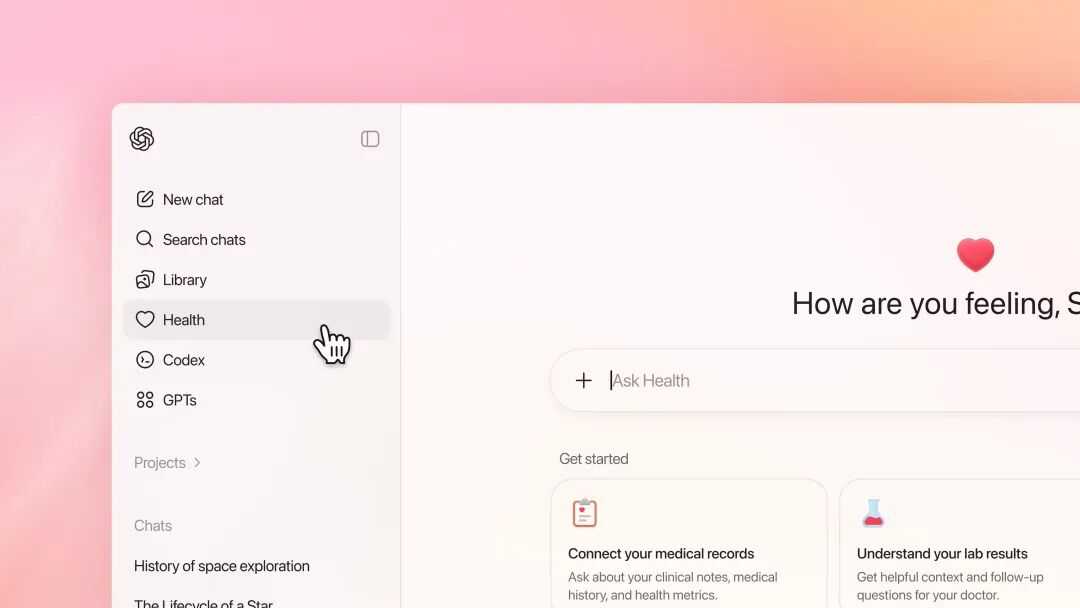
It can directly connect to your medical records, various fitness apps, and even Apple Health data on your iPhone.
It uses incredibly smooth logic to help you break down those medical terms that are so complex they can give you a headache.
Whether you want to plan your weight-loss dinner for tomorrow or figure out the cholesterol levels in your medical report, it can answer all your questions fluently.
According to data released by OpenAI, more than 2.3 million people worldwide use ChatGPT every week to ask health questions.
Since everyone loves to "register" with AI, OpenAI simply opened a digital clinic.
The End of Data Silos: When Apple Health Meets the Strongest Brain Capacity
Have you noticed that our current health data is actually quite disorganized?
Electronic medical records reside on the hospital's intranet, heart rate data jumps on a smartwatch, and dietary records are hidden in another app.
If you want to compare recent blood sugar changes, you have to switch between several apps like a detective.
ChatGPT Health did something very practical this time: it pieced together all these scattered fragments into a complete map.
It is connected to b.well, the largest medical data platform in the United States, which means that massive amounts of electronic medical records can be synchronized instantly.
If you're an Apple fan, once you enable Apple Health permissions, AI can track your sleep and activity patterns every day.
It feels like you've hired a knowledgeable butler who has all your medical records from childhood to adulthood.
All you need to do is casually ask: Am I fit for a half marathon right now?
It won't give you a bunch of nonsense; instead, it will combine your cardiopulmonary performance from last week and your sleep quality from last night to give you extremely precise advice.
This level of personalization is something that even outpatient doctors who see hundreds of patients every day would find difficult to achieve.
Even before you go to the hospital for a follow-up appointment tomorrow, it has already prepared a list of five core questions you should ask your doctor.
More than just reading data: it understands your medical history even better than some doctors.
In order to prevent ChatGPT from becoming one of those "barefoot doctors" on the internet who spout nonsense, OpenAI has indeed put in a lot of effort this time.
They invited more than 260 top doctors from 60 countries around the world to serve as "mentors" for this AI.
These professionals have provided 60 pieces of feedback over the past two years, with only one goal: to correct deviations.
They taught the AI to recognize when to comfort you and when to seriously tell you to go to the emergency room immediately.
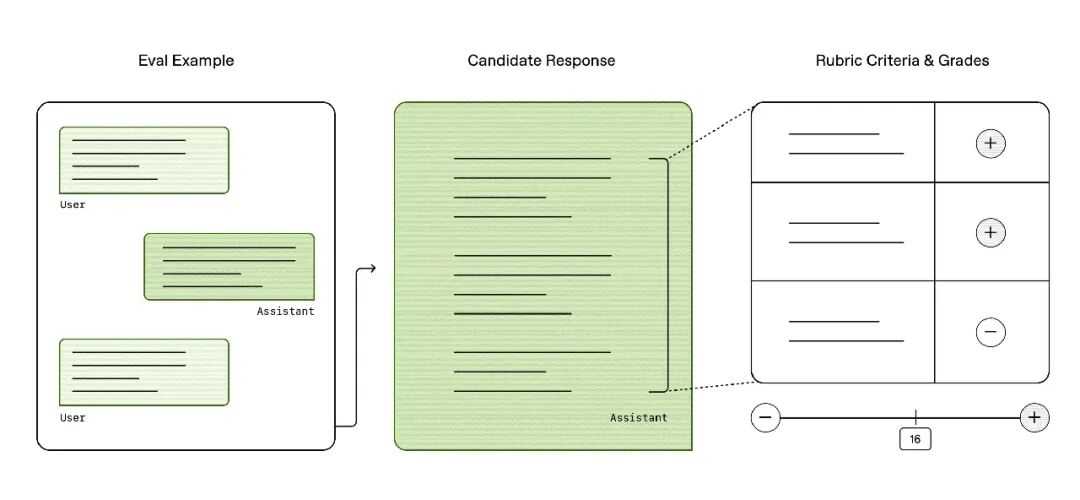
OpenAI even developed a testing framework called HealthBench specifically for assessing the safety of AI.
The original intention of this system is very clear: to perfectly combine "speaking in plain language" and "speaking accurately and vividly".

Here is a chillingly real case involving Fidji Simo, the CEO of Instacart.
She was once hospitalized for kidney stones. Her attending physician was extremely busy and prescribed her a routine antibiotic.
As a long-time chronic disease patient, she was cautious and gave her medical records to ChatGPT for analysis.
The AI immediately issued a warning: Based on your medical history, this antibiotic may cause a recurrence of a serious infection you had years ago!
When she told the resident doctor about this discovery, the doctor was not embarrassed at all; instead, he breathed a sigh of relief.
The doctor bluntly stated: "I only spend an average of 5 minutes on rounds for each patient. The medical records are too thick and messy, making it really difficult to discover such hidden risks."
You see, this is what AI does best: it never gets tired and never misses any annotations.
After reading this, aren't you eager to send your medical examination report to the AI to take a look?
The barrier to a smooth experience: How to upgrade ChatGPT Plus?
However, reality is often harsh; advanced features for in-depth data analysis often require a Plus membership to unlock.
However, in China, opening a ChatGPT Plus account is practically a massive challenge.
You have to deal with all sorts of foreign virtual credit cards and the payment risk control measures that could block your account at any time, making the process extremely tedious.
Many users went through a lot of trouble, only to get stuck at the payment stage, and were so angry they wanted to throw their phones away.
To save you some trouble, here's a website that offers extremely affordable ChatGPT Plus shared hosting accounts.
You can experience top-notch AI health management features at a very low cost, saving you from those tedious card opening procedures.
Please click the link below to register a Planet account ▼
Click the link below for a detailed guide to registering your account on Planet▼
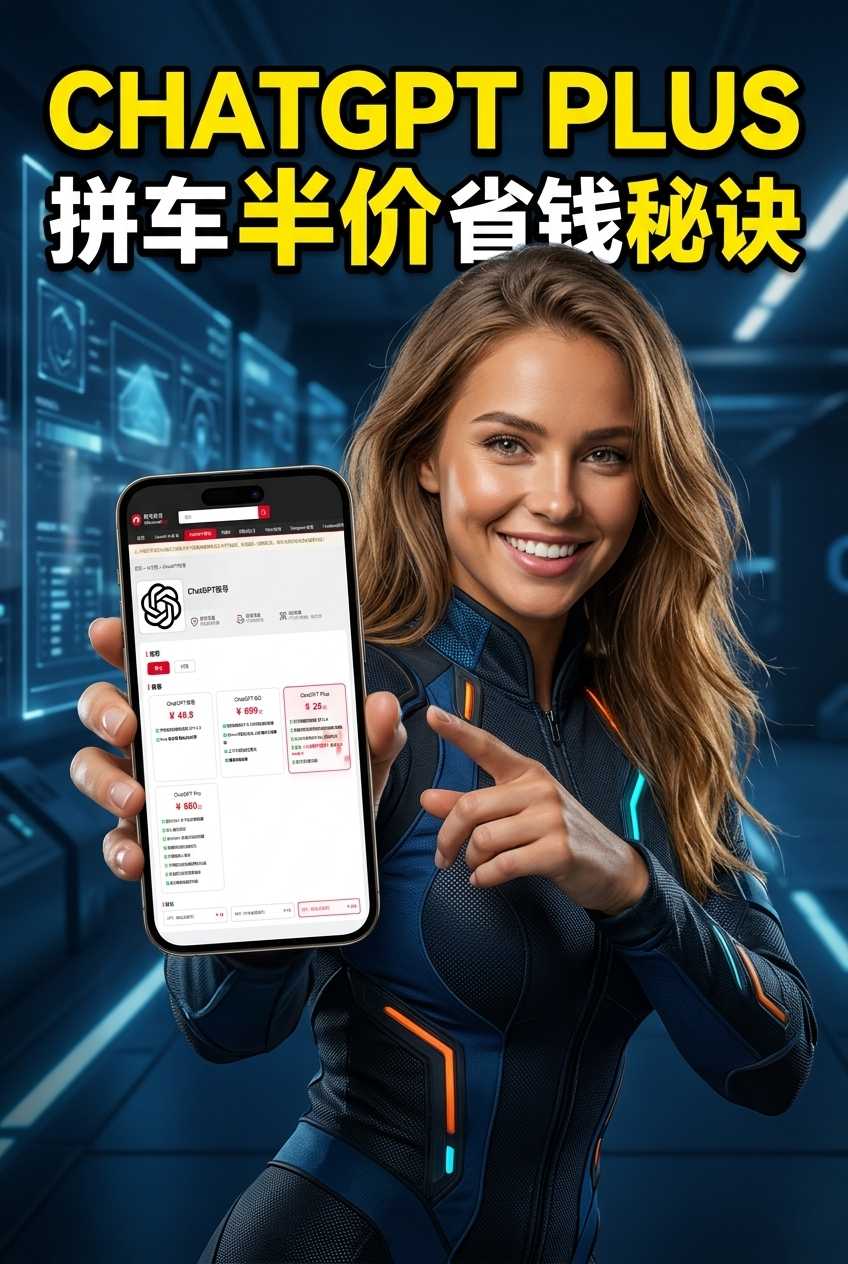
This co-living model is very popular now, as it allows users to enjoy the powerful logic of ChatGPT Plus while easily saving a lot of money.
Privacy and Boundaries: Will AI secretly learn your medical records?
When it comes to medical data, the most sensitive issue for everyone is privacy protection.
Nobody wants their private bodily secrets to become fuel for AI training models.
OpenAI has implemented a "physical isolation" in its architecture, establishing a completely independent health space.
All your conversations and uploaded files in the health channel will be locked in a private safe.
This sensitive information will absolutely not be sent to ordinary ChatGPT chat boxes, let alone used to iterate models.
Except in very rare cases, such as when it needs to consider whether you have recently changed jobs or are experiencing life stress, it will remain tight-lipped.
All access apps must undergo additional security audits to ensure they only take the minimum amount of necessary information.
This strict closed-loop design is actually intended to shackle this technological behemoth with the constraints of civilization.
Although this feature is currently on the waiting list and users in China cannot experience the full version due to geographical restrictions, the storm has already begun.
Conclusion
Is ChatGPT's health features the Prometheus of the medical world, or Pandora's box?
Standing at the crossroads of technology and ethics, the emergence of ChatGPT's health features undoubtedly represents a sweeping paradigm shift.
It's not just a change in tools; it's a disruptive blow to the traditional discourse of medicine . This ability to transform massive amounts of fragmented data into insights is the core totem of future digital medicine.
Admittedly, AI has reached near-peak levels in logical reasoning and data retrieval , but medicine has never been simply a cold aggregation of algorithms. The empathy conveyed in eye contact and the human judgment in complex ethical dilemmas remain insurmountable barriers for human doctors.
We are currently at a singularity : AI is responsible for the ultimate rationality and meticulousness , while human doctors are responsible for the emotional warmth and support.
Instead of fearing unknown technologies, we should actively embrace this efficiency revolution. Every technological leap is essentially about empowering individuals with more autonomy.
In this age of information overload, mastering your own health data means taking control of your life.
We recommend that everyone continue to follow OpenAI's official updates. Once the candidate list is released, be the first to experience the sense of security brought by this "silicon-based brain"!
If you still have any questions about the boundaries of AI in healthcare, or want to know how to make more effective use of the health data you have, feel free to leave your thoughts in the comments section. Let's explore this future full of possibilities together!
Hopefully, the article "ChatGPT Medical Function Launched: Can AI Doctors Really Replace Humans?" shared on Chen Weiliang's blog ( https://www.chenweiliang.com/ ) will be helpful to you.
Feel free to share this article's link: https://www.chenweiliang.com/cwl-33581.html