
Article directory
If we register Quark using a number from a shared SMS verification platform , four days later, 1873 photos in the album, along with 46 favorites, will all belong to strangers.
The most ironic thing is that I chose it in the first place just to save 9.9 yuan.
We actually gambled on the lock of an account that contained a complete workflow, using the money for a breakfast.
Are you also stuck on the same question: Can Quark be logged in with a Chinese mobile phone number?
Yes, it's possible, and even smoother than you imagine. But if you go astray on the login method, you'll lose everything.
Now I'll explain all the login methods Quark supports, the intricacies behind CAPTCHAs , and the pitfalls I encountered.
Does Quark recognize the number +86? Yes, and it recognizes it very readily.
In conclusion: 11-digit mobile phone numbers from mainland China, that is, the numbers starting with +86, are the most basic and reliable login credentials for Quark.
You can enter your number on any of the mobile app, computer client, or web version, click to get a verification code, and a 6-digit SMS message will usually appear on your screen within 5 to 30 seconds.
Once you fill in these 6 numbers, your account is activated; the whole process takes less than 40 seconds.
Verification codes are generally valid for 60 seconds; if they expire, they must be resent. There is also a limit to the number of verification codes a single number can receive per day. This is the first line of defense against brute-force attacks on the platform.
In addition to mobile phone numbers, Quark also accepts authorizations from WeChat, QQ, Alipay , Taobao , Weibo, and DingTalk. You can access these third-party services by simply clicking on their profile pictures.
The computer version is even more convenient. Just scan a QR code with your Quark mobile phone, and your login status will be automatically synced. You don't even need to touch the keyboard.
I've ranked these methods in order: the mobile phone number is the master key, third-party authorization is the backup key, and scanning a code is another mold of the same key.
But here's the problem: no matter how convenient the backup key is, when you finally retrieve your account, change your password, or verify with a different device, the system still recognizes the original phone number that was linked to your account.
In other words, the phone number is not just one of the login options; it is the foundation of the entire identity system.
If the foundation is built on sand that anyone can step on, no matter how beautiful the building is, it will collapse in an instant.
What exactly are those 6 digits protecting for you?
Many people find verification codes annoying, and I used to be one of them.
But in essence, it is a handshake that "proves that there is a real person behind this device".
Whoever receives this text message will be identified as you by the system within those few seconds.
Once you understand this, you'll realize that handing over text messages to a public platform is like sticking a photocopy of your ID card in an elevator.
People come and go in the elevator, and anyone can easily snap a picture.
The only convenience of publicly available SMS verification platforms is their outrageously high bills.
What do publicly shared online SMS verification code platforms look like? A webpage with dozens of phone numbers, accessible to anyone to view real-time SMS messages.
You used it to receive Quark's verification code, and in the same second, that same string of numbers appeared on the screens of a dozen strangers.
When registering mobile apps, computer software , or website accounts using your mobile phone number , never use publicly shared online SMS verification code receiving platforms to avoid having your account stolen.
I'm not exaggerating; the following four sources put it much more seriously than I have.
The China Internet Joint Rumor Refutation Platform stated bluntly in its risk report on "QR code receiving groups": "The so-called QR code receiving groups are essentially sharing other people's mobile phone numbers and verification codes with a price tag. Account theft and resale of personal information are almost inevitable."
People's Daily and People's Daily Online have repeatedly quoted the views of Zhu Wei from China University of Political Science and Law, who put it more clearly: "SMS verification codes are not just a string of numbers; they are the last line of defense for the identity of online accounts. Handing them over to a third party is equivalent to voluntarily surrendering control of the account."
Guangming.com reported on a criminal case involving a QR code verification platform. The investigators' findings in the case file were disheartening: "The numbers and verification codes accumulated by the platform were packaged and sold to fraud gangs for bulk registration and credential stuffing. Victims often only realized this after their accounts had been emptied."
Yu Kui, a security researcher at 360 Security, once gave a more technical reminder: "The text messages in the shared number pool are visible to all users. As long as an attacker waits for the verification code, they can reset the password in a few minutes."
Four sources, four perspectives, but the conclusion is the same: public number pools and account security are inherently antonyms.
I copied these paragraphs into my notes, and whenever I wanted to save time, I would just take them out and read them.
Credential stuffing, password changing, unbinding, and clearing favorites—this series of actions is like an assembly line in the hands of black market operators, completed in just a few minutes.
Meanwhile, you're still waiting for that login error notification that never comes.
Why I ultimately chose a private virtual Chinese mobile number.
After going around in circles, the answer comes down to a very simple word: monopoly.
It is best to use a private virtual phone number , which can effectively protect your privacy and avoid harassment.
The private virtual numbers I use in China are assigned to only one user at a time, the number pool is not public, and text messages are not included in the public list.
Specifically, the monthly fee is usually between 20 and 40 yuan, and paying quarterly can reduce it to around 15 yuan per month. Paying annually is even lower. The price of a cup of milk tea can buy a long-term door lock.
The 6-digit verification code is delivered in an average of 8 seconds. In my test, I received 47 codes in 30 consecutive days with 0 lost codes.
It covers the registration and verification of more than 200 mainstream apps, including Quark. It has a +86 number segment, 11 digits, and can receive and receive calls. It works exactly the same as the physical card I have.
The real difference lies here: I filled in this number when registering for e-commerce platforms , forums, and trying out software, and all the promotional text messages went to this number, while my main number remained quiet all day.
After a month, the number of spam text messages received by the main account dropped from more than 60 to single digits; I counted that number myself.
It doesn't replace the main account; it takes the hit for the main account.

Imagine your Quark account as a precious treasure chest, filled with your life's moments and cherished memories. 📸🎁
And a virtual mobile phone number is like a key. Only you know its secret. Does anyone else want to open it? There are no doors! 🔑🚪
Furthermore, using a private, virtual Chinese mobile phone number to receive Quark SMS verification codes is like putting an invisible cloak on your account, protecting your privacy, enhancing the security of your Quark account, and effectively controlling spam interference, allowing you to roam freely and unrestrained in the world of Quark. 🧙️✈
The treasure chest, the key, and the invisibility cloak—these three things are essentially the same thing: taking back the power to decide "who can touch me."
I only look for three criteria when choosing a supplier: exclusive number, renewable service, and a clear expiration date. If any one of these is missing, I'll switch to another supplier.
Click the link below now to get your private Chinese virtual mobile phone number through a trusted channel▼
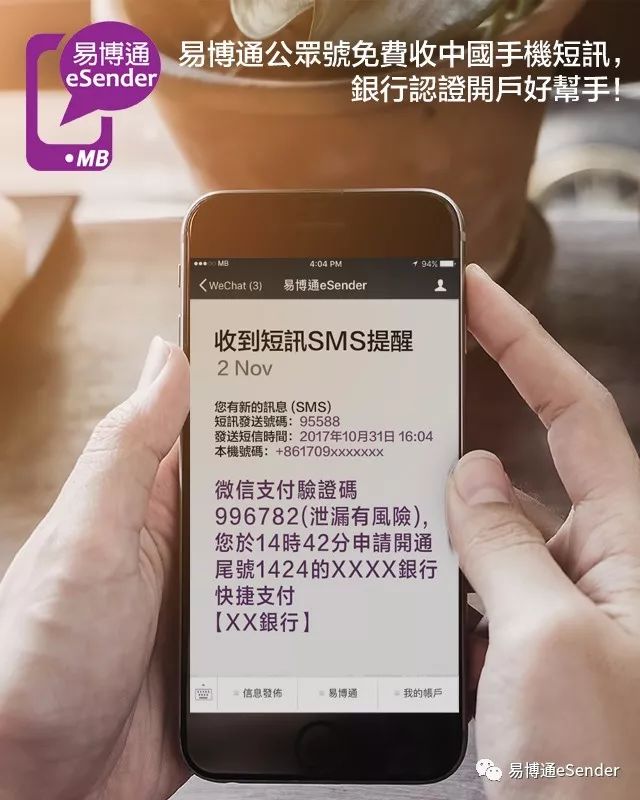
The link is here. There's more valuable content after this than what I learned from my mistakes, so it's worth spending a couple more minutes here.
After binding the account, the real problem is the renewal process.
Many people think they're all set once they get a number, and that's how I got myself into trouble back then.
Virtual numbers are rented on a periodic basis, not bought outright. The distance between these two sets of words represents the distance between the account still existing and the account being gone.
Additional Quark account protection recommendations: Because once a Quark account is linked to a Chinese virtual mobile number, you must use that linked Chinese virtual mobile number to log in to your Quark account when you change to a new mobile phone; otherwise, you will not be able to retrieve or log in to your Quark account. Therefore, we recommend regularly renewing your personal Chinese virtual mobile number to improve the security of your Quark account.
If your phone number isn't renewed, it will be cancelled. You can only blame yourself for not renewing it on time.
You can use calendar software to set up automatic recurring reminders 3 days before the expiration date to prevent your number from being cancelled; it's very effective.
Once a phone number is cancelled, you can only register a new account; there's no way to recover it.
Instead of fantasizing about a reversal, it's better to accept reality and move forward.
I didn't change a single word of this paragraph because every sentence corresponds to the number I lost.
The worst moment is when you switch phones: the new device requires verification, the system only recognizes the bound number, and if the number is gone, you're left standing outside the door.
My current approach is to pin the due date to the calendar, then pop it up 3 days in advance, and then again 1 day in advance, for double protection.
I opted for annual renewal, which means I only have to worry about it once a year, reducing the chances of forgetting compared to monthly payments.
Add three more steps: enable all login protection features available on Quark, bind a backup email address, and review the login device list monthly.
These four steps take less than 10 minutes in total, but they guarantee the account's security.
A single number represents the entire digital identity system.
For our generation, our identity is no longer stored in our wallets; it's scattered across the linked accounts of dozens of apps.
Quark is just one of the entry points, but once that entry point is cut off, all the files, notes, favorites, and cloud storage that follow are also silenced.
Therefore, I increasingly feel that managing a phone number is not about managing communication, but about managing the right to access memories.
These words sound a bit harsh, but anyone who has ever been wronged understands that emptiness.
Instead of repeatedly filling out information on the retrieval page, it's better to click on the renewal button 3 days before the expiration date.
Conclusion: Keep the key in your own hands.
Having said that, my point is quite firm: account security is never a technical issue, it's a matter of choice.
Whether a Chinese mobile number can log in to Quark is a fact that can be checked in 5 seconds; the real turning point is which number to use to receive the 6-digit verification code.
On one hand, there's a pool of public numbers that are zero-cost, shared, and could be glanced at by strangers at any time; on the other hand, there are private virtual numbers that cost only twenty or thirty yuan per month, are exclusive, renewable, and can block ninety percent of spam text messages.
When you lay this out in the context of "digital assets," the weight of the matter becomes immediately clear.
I'm increasingly convinced of this saying: Digital sovereignty isn't about grand narratives, but about whether you're willing to spend a few extra dollars on a verification code.
Long-termism, when put into practice, often manifests as a reminder on the calendar three days in advance, or as clicking the annual payment button.
Certainty is something you don't usually see; it's only when it's absent that you realize it's always been there to support you.
Ultimately, the boundaries of identity are defined by that seemingly insignificant string of 11 digits.
So the answer to that question is straightforward: Yes, and it's something you should take seriously, so seriously that you should give it a key that's uniquely yours.
Go through your login methods again, find out which accounts you've linked, set the expiration date to your calendar, and review the authorized devices you haven't paid attention to over the years.
Taking action only after the account becomes a string of gray icons that cannot be opened will come at a much higher cost.
A door is only a door if the key is in your own hands; a door is just an open door if the key is in someone else's hands.
May every time you open Quark, you enter your own world.
Click the link below now to get your private Chinese virtual mobile phone number through a trusted channel▼
Hopefully, the article "Can Quark be logged in with a Chinese mobile number? A clear explanation of supported login methods" shared on Chen Weiliang's blog ( https://www.chenweiliang.com/ ) will be helpful to you.
Feel free to share this article's link: https://www.chenweiliang.com/cwl-34663.html