
Article directory
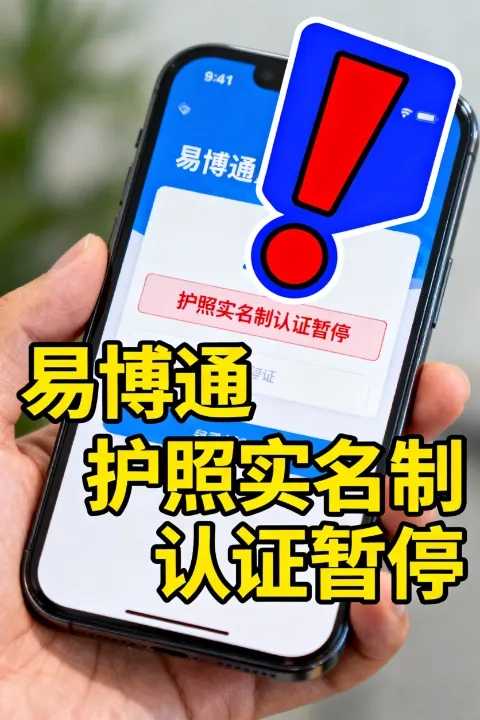
recent,Chen WeiliangReceived a message from eSender The official internal group announcement revealed the news:2025年10月23日20:00:00起. eSender (eSender)Announce--Chinacellphone numberwillPassport real-name authentication is not currently accepted, until further notice.
In short, Chinese users around the world were stunned. "Huh? I was just about to link my account, but it got blocked?" "If even my passport won't work, how can I use it?"
Goodness, this announcement has impacted the internet virtual account community, the cross-border e- commerce community , and even overseas user communities: this is not a minor adjustment, but a signal-level change!
Updated January 20, 2026: Good news! Now... eSender The system upgrade is complete, and you can now use your passport for real-name authentication.Chinese mobile number.
what is eSender ? Why are its actions so influential?
simply put, eSender (eSender) is aProvide privatevirtual phone number,Short messageVerification codeReceiving and account registration servicesplatform.
For overseas users in particular, it's like the "lifeline of internet phone numbers." Want to register for WeChat? Use it. Want to verify your Alipay account ? Use it. Want to link your account to a Chinese website? You still need it.
Because it can provide genuine Chinese virtual phone numbers , many people working, studying, or starting businesses overseas rely on it to solve the problem of "not having a mainland China mobile phone number".
Now, the blanket suspension of passport real-name authentication is equivalent to directly "strangling the neck of cross-border communications."
What is the real meaning of the suspension of the passport real-name system?
It seems like a simple word "pause", but there are multiple logics behind it.
First, this represents an escalation of policy signals . Expanding real-name authentication from ID cards to passports already signifies a relaxation of regulatory boundaries; this suspension likely means that identity verification mechanisms will be tightened again.
Secondly, this could be a measure to combat illicit activities and prevent abuse . In the past, many people used their passports to register accounts under their real names, then used these accounts to register on various social media platforms or even for mass marketing. As a result, these platforms became a haven for "tool accounts." Regulatory authorities are naturally unhappy about this.
Finally, don't overlook the technical aspects. Real-name data needs to be connected to the public security network or immigration system, and the technical interface for passport real-name verification is relatively complex.
Sometimes, a pause is not a "lockdown" but a signal for a "system upgrade."
Who are the people affected this time?
It can be said that this change has affected almost all users of Chinese virtual numbers overseas.
such as:
- Chinese in Singapore, Malaysia and Thailand;
- in Use eSender Foreign traders who register Chinese applications;
- Want to log in to WeChat,Vibrato, Alipay and other mainland platforms;
- And through eSender Cross-border sellers who have opened enterprise accounts and store accounts.
These people usually use their real names and passports to open accounts, but now that the service has been suspended, it’s like their internet “life plug” has been suddenly pulled out.
So what can we do now? Are there any alternatives?
Although the real-name registration process for passports has been suspended, it doesn't mean all accounts are blocked. According to the announcement, "new passports will not be accepted for the time being."
mean:
- Accounts with real-name passports will not be affected, it can still be used normally;
- New user without real name, temporarily unable to register a Chinese account with a passport;
- if you haveMainland China ID card information, you can still use your real name normally.
Special reminder:
If you have successfully completed real-name authentication using your passport, be sure to renew your account regularly!
Because once the number expires, you may not be able to use your passport to reapply for real-name authentication in the future, and then your number will really be gone.
In other words, old accounts will be retained, but new ones will be restricted. If you've successfully linked your account before, leave it alone. But if you haven't opened an account yet, you can only wait and see.
Another very important point: After binding an account with a Chinese virtual phone number, if you change to a new phone and want to log in to the account again, the system will require you to use the original bound Chinese virtual number to verify your login.
In other words, if the number has expired or cannot be renewed, you will not only be unable to log in to the account , but you will also have no chance of recovering it!
Therefore, it is strongly recommended that you renew your Chinese virtual mobile number regularly . This is not only to keep your number, but also the last line of defense to protect the security of all your accounts.
In short: Don't mess with old accounts, new accounts are hard to open, protecting your account is the only true way to stay safe 🧠📱
Here are three practical and reliable alternatives.
Don't be discouraged, smart users have already started to save themselves.
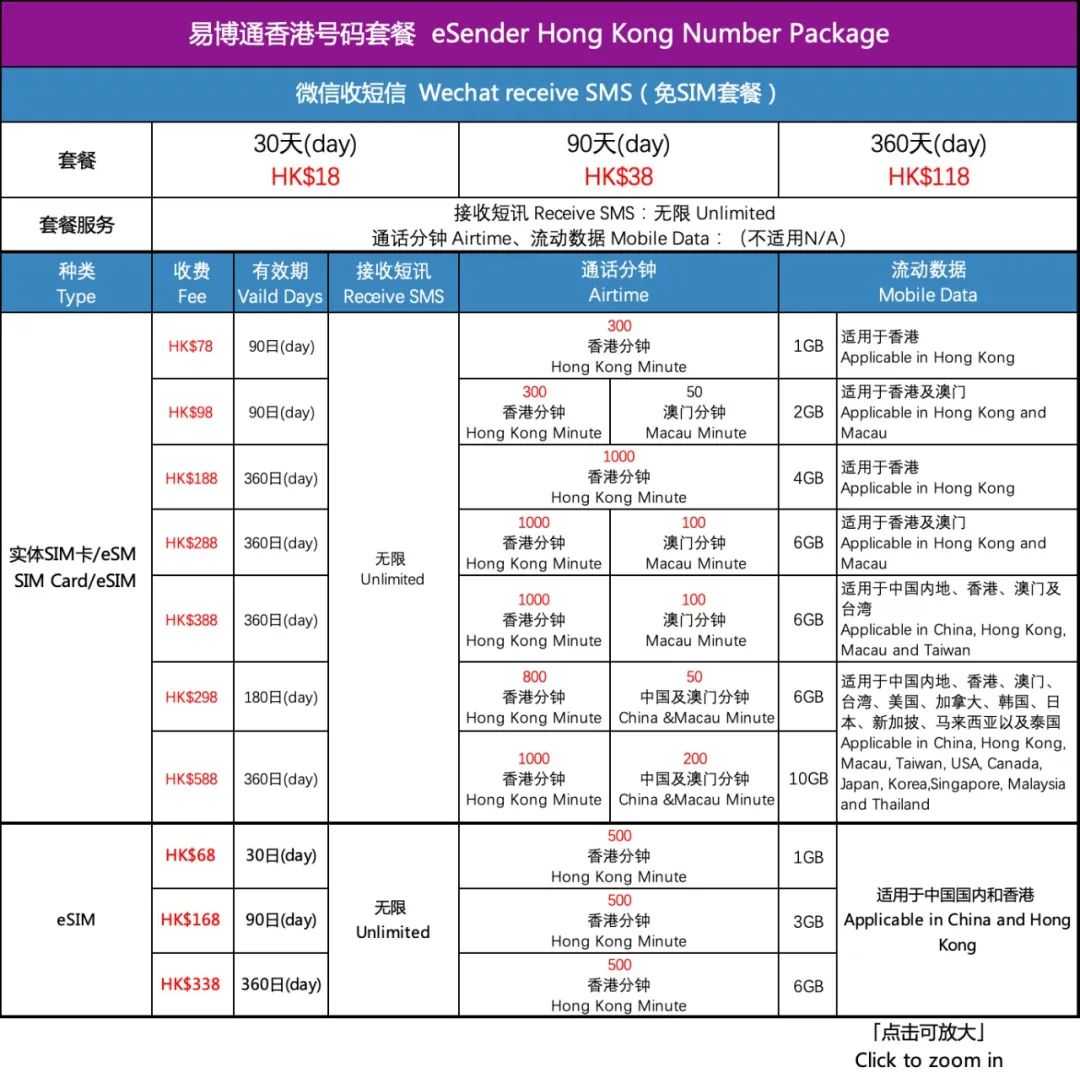
First, consider Hong Kong or Macau phone numbers. Although these numbers are not mainland China numbers, they have high compatibility and can be used for verification on some domestic platforms.
For information on how to apply for a Hong Kong mobile number , please click the link below ▼
Second, pay attention to international versions of products. International versions of WeChat, Alipay, and Baidu are relatively more compliant with passport verification.
Third, wait for the system to recover. eSender The official announcement clearly states: "Until further notice." This suggests there's a chance of restoration. Once the system and interface upgrades are complete, passport real-name registration may be reactivated.
The underlying logic of this change: the battle between regulation and compliance
In fact, from a more macro perspective, this is not only eSender action, butReadjustment of the entire real-name system.
In recent years, the regulation of the virtual communications industry has become increasingly strict. From fraud prevention to gray market prevention and cross-border data management, everything is moving towards "real-name traceability."
Passport registration, by its very nature, crosses national borders for verification, resulting in a longer security chain and greater risk control pressure. Suspending registration may be for the purpose of unifying standards, updating interfaces, and strengthening security.
Therefore, this step is like the "silence before the thunderstorm".
Confusion and reflection from the user's perspective
Many users complained: "I just wanted to receive a verification code, but it's more troublesome than applying for a visa!"
But from a regulatory perspective, their logic is valid. After all, a mobile phone number can be used to log in to a bank, register social media accounts, and receive sensitive verification codes. If abused, the consequences could be disastrous.
Therefore, this "passport real-name suspension order" has become a tug-of-war between security and convenience.
What will the future hold?
My personal prediction is: eSender The real-name registration system for passports will not be closed for a long time;Optimize the system after temporary adjustment.
The following three trends may emerge in the future:
- Added a stricter passport review channel;
- IntroductionAIDual authentication of identification and face verification;
- Maybe even with overseasembassyData docking enables “cross-border real-name verification”.
If we really get to this point, it will be a truly international real-name system.
Conclusion
This incident shows that every "real-name change" in the digital age is no small matter. It concerns user privacy, corporate compliance, and national security.
eSender The pause is just a microcosm. It reminds us: In the world of digital identity,Real name is not only about “who you are”, but also about “who you should trust”.
The suspension of real-name passport requirements is not the end, but the beginning of rebuilding the trust system.
The real-name world of the future may be smarter, safer, and better at "knowing who you are."
Hope Chen Weiliang Blog ( https://www.chenweiliang.com/ ) shared "Breaking News! eSender China suspends passport real-name authentication for mobile phone numbers: What signals does this signal? ” may be helpful.
Welcome to share the link of this article:https://www.chenweiliang.com/cwl-33336.html