
Article directory
- What does WordPress mean?What are you doing?What can a website do?
- How much does it cost to build a personal/company website?Cost of building a business website
- How to choose the right domain name?Website Construction Domain Name Registration Recommendations & Principles
- NameSiloDomain Name Registration Tutorial (Send you $1 NameSiloPromo Code)
- What software is needed to build a website?What are the requirements for making your own website?
- NameSiloResolve Domain Name NS to Bluehost/SiteGround Tutorial
- How to manually build WordPress? WordPress Installation Tutorial
- How to log in to the WordPress backend? WP background login address
- Wordpresshow to use?WordPress backendGeneral Settings & Chinese Title
- How to change language settings in WordPress?Change Chinese/English setting method
- How to Create a WordPress Category Directory? WP Category Management
- How does WordPress publish articles?Editing options for self-published articles
- How to create a new page in WordPress?Add/edit page setup
- How does WordPress add menus?Customize navigation bar display options
- What is a WordPress theme?How to install WordPress templates?
- FTP how to decompress zip files online? PHP online decompression program download
- FTP tool connection timeout failed How to configure WordPress to connect to the server?
- How to install a WordPress plugin? 3 Ways to Install a WordPress Plugin - wikiHow
- How about BlueHost hosting?Latest BlueHost USA Promo Codes/Coupons
- How does Bluehost automatically install WordPress with one click? BH website building tutorial
- Detailed explanation of the custom template path code of the WordPress Shortcodes Ultimate plugin
In his previous article, Chen Weiliang talked about how to install and set up WordPress.
Next, we need to quickly familiarize ourselves with WordPress and perform some necessary basic settings.
Before starting the setup, it is recommended that you click on each option in the left menu bar to see what it does.
Let's first talk about some of the most basic settings you should make after building a website with WordPress .
Log in to the WordPress backend
This tutorial talks about how to log in to the WordPress backend ▼

When you successfully install WordPress and log in to your WordPress site, you will see your WordPress backend interface dashboard (Dashboard)▼
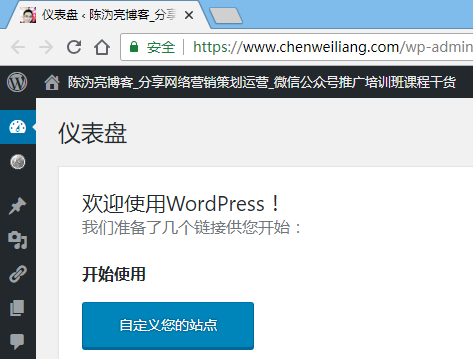
Basic Settings for WordPress
First, all you need to do is click on Settings, then General.
1) General options
Settings -> General:
- Check your time zone
- other information
Site title (Title) settings:
- Your company name, website name or blog name
Subtitle (Tagline) settings:
- ▼ You can write a subtitle or write a sentence for your website, so that the audience can know what your website is at a glance?
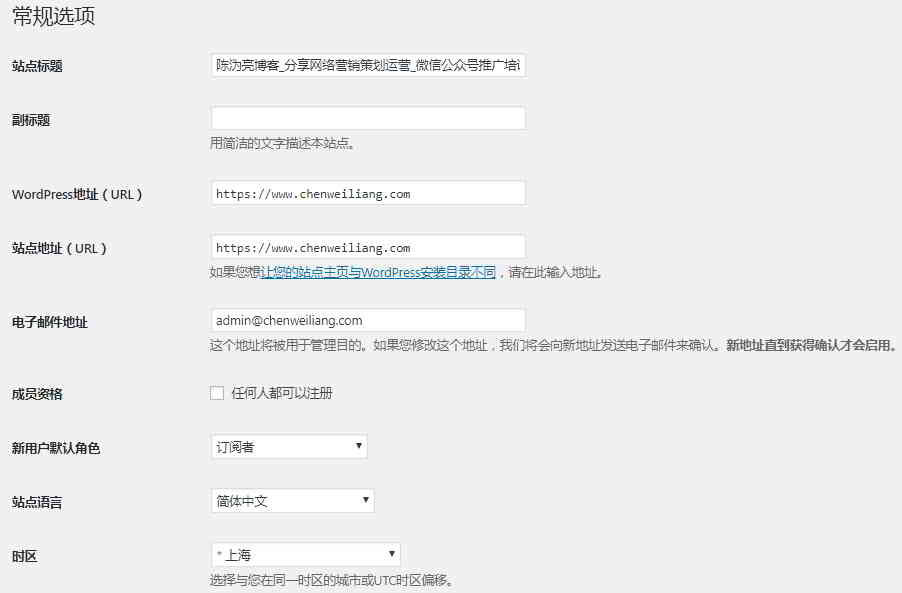
Usually, the WordPress address (URL) and site address (URL) can be left at their default settings ▲
2) Modify WordPress permalinks
Settings -> Permalinks:
- Click Settings, then Permalinks (Permalinks).
- This setting determines the form of links between each page and article.
You can choose the type of link you want, e.g. "Custom Structure" ▼
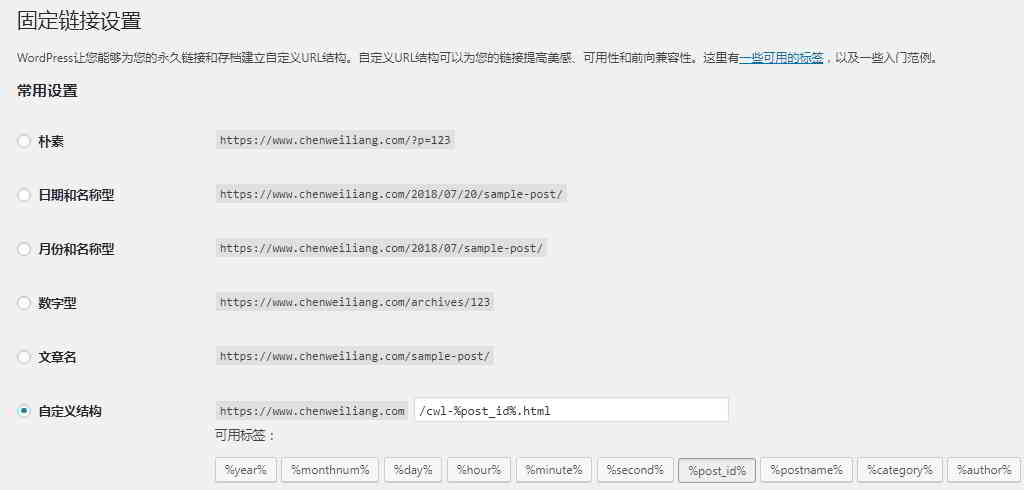
3) Set up WordPress discussions
Settings -> Discussion:
- WordPress itself has the function of leaving comments.
- Click Settings -> Discussion.
- This is where you control website comments.
If you want to turn off site-wide comments, you can set this in "Discussion" ▼
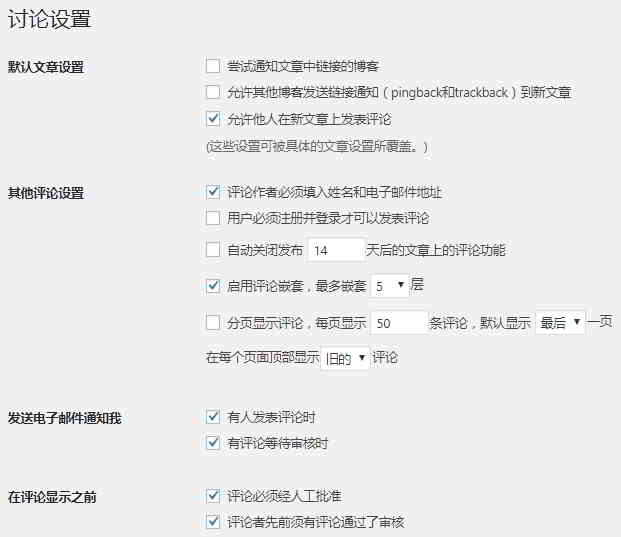
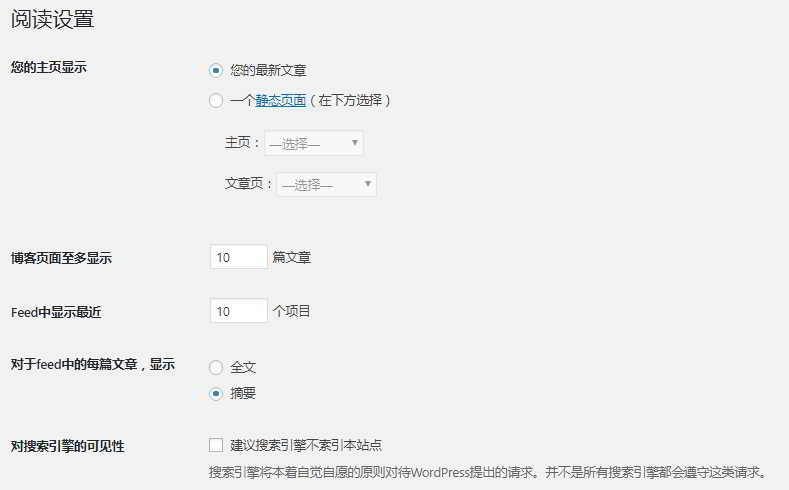
4) Set up WordPress to read
Settings -> Read:
- Click Setting and Reading.
- You can choose how many articles you want to display on each page.
- (Note: Different theme settings may be different)
Not only can you create a blog with WordPress, but you can also use it to create a personal or business website.
Select Static Page (select below), then select the page you want to set as your homepage (Page), so your blog becomes a personal website (static homepage website).
When setting the search engine index, please do not check "Suggest search engines not to index sites" ▼
5) Set up a WordPress profile
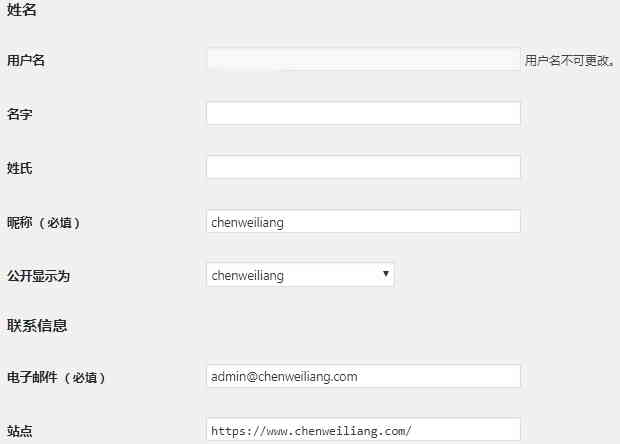
Users -> My Profile:
- Click Users, and then click My Profile.
- It is recommended that you fill in the basic information.
- For the security of the website, it is recommended that the background login user name should not be the same as the public name.
The image below is the profile settings with the username hidden ▼
6) Change WordPress website password
If you need to change the website password, you can click on "User" and then click on "My Profile" ▼

WordPress site, forgot password, what should I do?
Here are 4 ways to quickly retrieve your WordPress password ▼
7) Other WordPress settings
- The above contents are the settings that often need to be modified, and the others usually use the default settings.
- You can also check other WordPress settings one by one as needed.
Congratulations, you have completed the general setup of WordPress!
Hopefully, the article "How to Use WordPress? WordPress Backend General Settings & Chinese Title" shared on Chen Weiliang's blog ( https://www.chenweiliang.com/ ) will be helpful to you.
Feel free to share this article's link: https://www.chenweiliang.com/cwl-907.html